Rechercher dans ce blog

Kamis, 30 September 2021

Ontario recommends Pfizer shots instead of Moderna for young adults over possible heart risks - National Post

'I know that this news may make some people nervous.... But the benefits of vaccination continue to significantly outweigh the risks of COVID-19'

Article content

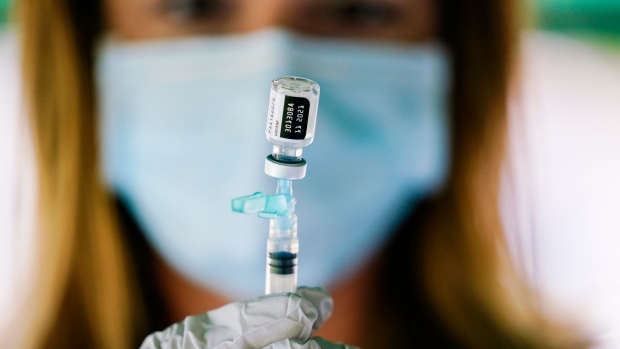
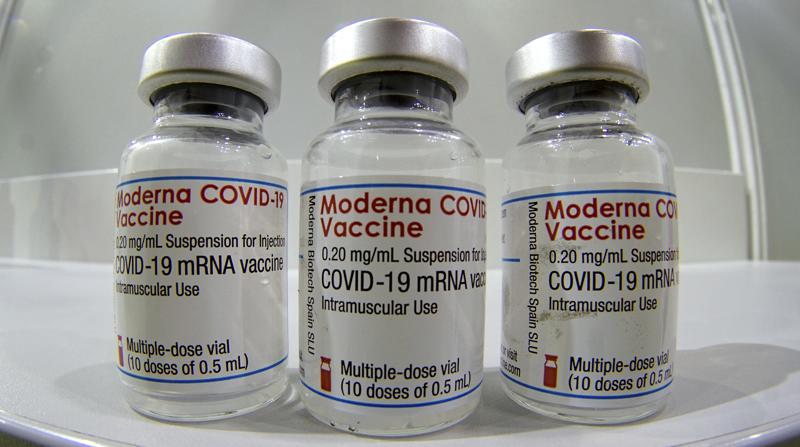
Following the finding of a potential one in 5,000 risk of heart inflammation after a second dose of Moderna, Ontario is recommending people aged 18 to 24 be preferentially vaccinated with Pfizer — a decision made “out of an abundance of caution,” but one that could rattle confidence in COVID-19 vaccines.

Advertisement

Article content

“I just want to be clear: We’ve had no fatalities whatsoever associated with this complication related to this rare side effect of this vaccine,” Dr. Kieran Moore, Ontario’s chief medical officer of health, told a media briefing Wednesday.

Moore said the decision to issue a “preferential recommendation” was ultimately his, based on a “very small but observed increase” of myocarditis, or inflammation of the heart muscle, and pericarditis, inflammation of the sac around the heart, following vaccination with Moderna compared to Pfizer in 18- to 24-year-olds, particularly among males.

Article content

Between June and August, based on more than 96,000 second doses of Pfizer and Moderna, both mRNA vaccines, the rate of heart complications following a second dose of Moderna was one in 5,000.

Advertisement

Article content

For Pfizer-BioNTech, the rate was one in 28,000 doses.

The majority of reported cases have been mild, with most people requiring an anti-inflammatory like ibuprofen or naproxen, Moore said. Of the “very small” number admitted to hospital for a blood test, cardiogram or ultrasound, most were quickly sent home, he said.

Article content

  1. Heart inflammation after COVID shots higher-than-expected in study of U.S. military

  2. CDC: No deaths in young U.S. adults with myocarditis after Pfizer shot

Moore said the risk of myocarditis and other serious “events” such as abnormal heart beats, blood clots in the legs or lungs, heart attack or intracranial haemorrhage (bleeding in the brain), is 18 times higher with a COVID infection.

“I know that this news may make some people nervous and heighten concerns about receiving a COVID vaccine, and I can understand that,” Moore said. “But the benefits of vaccination continue to significantly outweigh the risks of COVID-19 illness and related, possibly severe, consequences.”

Advertisement

Article content

Ontario’s recommendation takes effect immediately, but 18- to 24-year-olds can still receive Moderna, if they so choose.

Symptoms of myocarditis or pericarditis, such as chest pain, shortness of breath and rapid or abnormal heartbeat, typically start within one week of being vaccinated, and most often after the second dose. Anyone who hasn’t developed symptoms within this timeline, the province said in a release, “should feel confident that they are unlikely to develop symptoms later,” and people who had Moderna for their first dose can safely take Pfizer for their second.

Moore said he did have concerns about addressing the myocarditis risk, but “I have to build trust with the public. We have to have accountability to the public and I think the public deserves to know the facts.” Expert advisers recommended the public be told of the increased risk “of this very rare event,” he said. “And I hope the public will realize we’re trying to be as transparent as possible.”

Advertisement

Article content

Last week, a University of Ottawa Heart Institute preprint study that estimated a one in 1,000 risk of post-vaccine myocarditis following vaccination with an mRNA vaccine was retracted at the request of the authors, who said incorrect data had vastly inflated the incidence. The adjusted incidence was one in 25,000 doses.

It’s not clear why the association appears higher with Moderna versus Pfizer. Moderna has a higher amount of mRNA, “and we know that some of the side effects from Moderna are more profound,” said infectious diseases specialist Dr. Isaac Bogoch. Moderna may also offer a longer-lasting immune response, he said, which, again, might be related to the amount of mRNA in Moderna versus Pfizer.

While myocarditis appears more common in males than females, and most often after the second dose, “that doesn’t mean it’s exclusively males, exclusively young and exclusively second dose,” said Bogoch, of Toronto’s University Health Network. “It can happen after the first dose in females and older, but it’s rare. It’s still a rare event.”

“You have to be transparent, you have to tell people what the risk is and you have to express uncertainty that this might change with time,” he said.

With additional reporting from The Canadian Press

• Email: skirkey@postmedia.com | Twitter:

Advertisement

Comments

Postmedia is committed to maintaining a lively but civil forum for discussion and encourage all readers to share their views on our articles. Comments may take up to an hour for moderation before appearing on the site. We ask you to keep your comments relevant and respectful. We have enabled email notifications—you will now receive an email if you receive a reply to your comment, there is an update to a comment thread you follow or if a user you follow comments. Visit our Community Guidelines for more information and details on how to adjust your email settings.

Adblock test (Why?)


Ontario recommends Pfizer shots instead of Moderna for young adults over possible heart risks - National Post
Read More

Vaccine mandate coming for N.L. public sector workers, says premier - CBC.ca

Newfoundland and Labrador could implement a vaccine mandate for public sector employees as early as next week. (Patrick Butler/CBC)

Newfoundland and Labrador could mandate COVID-19 vaccines for public sector employees in just one week, says Premier Andrew Furey.

At a briefing Tuesday, Furey said the provincial government is already in discussions with the unions representing the province's public sector workers, from health-care workers to teachers.

"We feel it's our responsibility to protect the people that we serve," Furey said.

The announcement came the same day the province provided details on how its vaccine passport system will work.

Furey said discussions with unions have been "open," and most have been receptive so far.

"Overall, there was a general willingness to participate, recognizing the current situation across the province," Furey said.

In a statement, Newfoundland and Labrador Teachers' Association spokesperson Jennifer Tulk said the union recently became aware of the government's plan for mandatory vaccinations, and is holding internal discussions.

"As with any decision by government that may impact working terms/conditions for NLTA members, meaningful consultation with the NLTA is required and details are critical," Tulk said.

In a CBC News questionnaire last spring, some of the province's teachers indicated they would support a vaccine mandate.

On Wednesday, the Newfoundland and Labrador Medical Association released a statement in support of mandatory vaccinations for all health-care workers.

"It's our job to make sure that every health-care professional, as much as we can, leads by example and makes sure that they don't get COVID 19 and pass it to their patients," said NLMA president Dr. Susan MacDonald in an interview with CBC News.

MacDonald said she doesn't know if all physicians in the province are vaccinated but the "vast majority" are.

Newfoundland and Labrador Medical Association president Dr. Susan MacDonald says the association is in full support of a vaccine mandate for health-care workers. (Mark Quinn/CBC)

She said the mandate could include consequences for physicians who refuse to get vaccinated and do not have a valid medical exemption.

"We hope we don't have to call for consequences. We hope that people do the right thing. But with anything else, there are consequences if you choose not to follow," she said.

In an email, a spokesperson for the College of Registered Nurses said they were waiting for more details from the provincial government before commenting on the mandate.

CBC has asked the Newfoundland and Labrador Association of Public and Private Employees for comment.

Questions still remaining

The province had previously shied away from committing to a mandate for its public sector workers.

In August, Health Minister John Haggie told reporters that a vaccine mandate could be a legal and charter issue, and the province was waiting to see what would happen in other jurisdictions across the country before bringing in its own mandate.

Now that the federal government, along with other provinces and territories, have announced some version of a vaccine mandate for workers in the public sector, the province is following suit.

Details on the mandate remain scarce, as do details on the vaccination status of the province's public sector workers.

Health Minister John Haggie says it's difficult to determine vaccination rates among health-care workers. (Patrick Butler/CBC)

At a media briefing Wednesday, Haggie said the government has not yet determined what repercussions employees will face for refusing to get vaccinated. He said the Department of Justice and Public Safety is developing a regulatory framework.

Public health officials have not provided vaccination rates for health-care workers or public sector workers, although they said the vaccine rate among health-care workers is estimated to be high.

At Tuesday's briefing, Haggie said it is difficult to determine the vaccination status of health-care workers because some who work in the private sector also self-identify as working in health care.

"What we do know in general is that the vaccination rate of health-care workers tends to mirror the vaccination rate of the communities in which they live and work," he said.

Dr. Rosann Seviour, acting chief medical officer of health, noted Newfoundland and Labrador has not faced the tragic situations in long-term care homes seen in other provinces. (Patrick Butler/CBC)

Public health officials have not confirmed if any cases of COVID-19 in hospitals or long-term care were transmitted through staff, but acting chief medical officer of health Dr. Rosann Seviour pointed to the low rates of COVID-19 in the province's long-term care homes.

There are seven people in hospital due to COVID-19 in Newfoundland and Labrador.

When asked during a briefing on Wednesday if anyone in hospital had been vaccinated, Seviour said she could not reveal that information due to privacy concerns.

Read more from CBC Newfoundland and Labrador

Adblock test (Why?)


Vaccine mandate coming for N.L. public sector workers, says premier - CBC.ca
Read More

Rabu, 29 September 2021

Why is gold down $90 this September? Analysts eye price risks below $1700 an ounce - Kitco NEWS

(Kitco News) Gold is looking to wrap September down nearly $90, and analysts are warning of a possible washout if gold tumbles below $1,700 an ounce.

The two-punch combination of surging U.S. Treasury yields and a higher U.S. dollar is pressuring gold down amid inflationary fears and risk-off sentiment in the marketplace, according to analysts.

At the time of writing, December Comex gold futures were trading at $1,725, down 0.72% on the day, while the U.S. dollar index was at 94.36, up 0.64% on the day, and the U.S. 10-year Treasury yield was fetching 1.541%.

"The yields and the dollar are the major part of it. There is an inverse correlation between higher yields and metals. When yields are popping, metals are down, and the USD is up," RJO Futures senior commodities broker Daniel Pavilonis told Kitco News.

Gold is "just hanging in there," Pavilonis said, noting that if the precious metal falls below $1,673, the market could see a washout to $1,550 an ounce.

Considering the U.S. dollar index jump, gold is holding up pretty well, said MKS PAMP GROUP head of metals strategy Nicky Shiels.

"Gold is currently sitting at $1,730 (same level when Bitcoin hit its $60K peak and all the furor was about cryptos, less so precious). The ever-important $1,675 handle (triple bottom but also near where the bulk of ETF holders are long at) is nearby. Beyond that, $1,560 is where gold has technically erased all 'COVID premium' (a stretch we believe)," Shiels said on Wednesday. "Gold needs to reclaim an old floor ($1,750) before 50DMA is in view ($1,786)."

After the Fed Chair Jerome Powell signaled that tapering could begin in November and end by the middle of next year, all the near-term risk-off sentiment has gone to benefit the U.S. dollar and not gold, Shiels pointed out.

"Any near-term uncertainty (over debt ceiling, Feds taper, inflation worries, China etc) has then been channeled into the safety of the US$ alone, which is the dominant driver behind the persistent pressure in Gold & Silver," she said.

And a significant repricing of the U.S. dollar to the upside could lead to a bigger selloff in gold, Shiels added. "If the current repricing in rates & USD$ continues, putting real yields out of the negative territory, and the USD$ back near COVID highs (which would be a massive move…), that implies Golds fair price is in the $1,450-$1,470 range."

With the 10-year Treasury yield looking at a move towards 1.60%, gold is on "thin ice," said OANDA senior market analyst Edward Moya.

"The $1,700 level seems imminent for bullion, with many traders eyeing the March lows ahead of $1,670 as critical support. The reset of inflation expectations has not benefited gold prices at all, in fact, it has been the primary driver for Treasury yields," Moya said. "If gold can show signs of stabilizing, then longer-term investors will return and bet on the 2022 global economic recovery that will ultimately lead to a weaker dollar."

Despite all of this, there are still gold bulls out there who cite massive money printing. But the precious metal is not responding with a higher price target.

"Gold is an inflationary hedge," said Pavilonis. "But rates are going higher, which steals the rationale why gold would go up. There will come the point when rates are not high enough to hedge inflation. And the cat could be out of the bag towards the end of the year or by the middle of next year."

Also, the good news for precious metals investors is that gold's inverse relationship to higher yields won't last forever, according to Pavilonis. "Tapering is not raising rates, and if the Fed rejects the notion of raising interest rates for longer, there is a possibility there will be a mismatch with actual inflation," he said.

This year, the Federal Reserve has worked very hard to create a psychological narrative that inflation is temporary and the market believes it, Pavilonis noted. But the coming energy crisis and longer-lasting supply bottlenecks are questioning that type of thinking.

"We are seeing this in natural gas, cotton, and going to see that in grains again shortly. I don't think this is temporary. This is the beginning of larger waves to the upside," he said.

Adblock test (Why?)


Why is gold down $90 this September? Analysts eye price risks below $1700 an ounce - Kitco NEWS
Read More

Ontario recommends people aged 18 to 24 take Pfizer vaccine - CTV News

TORONTO --  An increase in cases of a rare heart condition in young adults who have received the COVID-19 Moderna vaccines has prompted Ontario to recommend the Pfizer-BioNTech shots for those aged 18 to 24.

The province says the rise of myocarditis and pericarditis cases has been particularly observed among males in that age group.

Between June and August, the province says the risk of myocarditis and pericarditis for males aged 18 to 24 following a second dose of Moderna was one in 5,000.

For those who received the Pfizer-BioNTech, the rate was one in 28,000.

The province says the side-effect is still rare and the majority of cases are considered mild.

The recommendation is preferential and people can still take the Moderna vaccines if they choose to.

This report by The Canadian Press was first published Sept. 29, 2021.

Adblock test (Why?)


Ontario recommends people aged 18 to 24 take Pfizer vaccine - CTV News
Read More

Dollar strength today is equal to gold weakness in terms of percentage gain and decline - Kitco NEWS

A surging U.S. dollar continues to pressure gold resulting in a further price decline. Yesterday the dollar index closed at the highest level this year, and today the dollar rally continued and resulted in a new record high for the year. As of 4:30 PM EDT, the U.S. dollar index is up by+0.68% and gold futures are down by -0.68%.

This means that the percentage advance in the dollar index is equal to the percentage decline in gold. Today's example clearly illustrates the intrinsic negative correlation between gold and the dollar. This occurs because gold is priced or paired against the dollar. This also shows that today's selloff in gold did not occur because of selling pressure, but rather dollar strength. The same cannot be said for the dramatic decline today in silver which we will address at the end of this article.

Today the U.S. dollar index gained 0.625 points and is currently fixed at 94.405, by far the highest value in 2021. However, even at this level, the dollar is 10% below the highs seen in March 2020 as well as in December 2016. In both of those instances, the dollar index hit a high just above 103. In March 2020 the dollar closed at 103.50 on a weekly chart which matches the highs achieved in December 2016.

The implications of the highs achieved both in 2016 and 2020 mean that even at this current level the dollar index could move substantially higher. Currently, the dollar's rise has been fueled by recent statements by the Federal Reserve that they are going to begin to wind down their unprecedented accommodative monetary policy that they put in place at the onset of the pandemic in attempts to temper the recession which followed. Now the Fed's accommodative monetary policy has been a key component of the economic recovery that has begun in the United States.

However, there have been real costs to Fed's $120 billion monthly purchases. The balance sheet of the Federal Reserve has now swelled to $8.4 trillion. Although the Federal Reserve has not made it clear when they will reduce their balance sheet, but they have announced that they will "soon" begin to taper their monthly accumulation.

Since the Federal Reserve announced that they will begin to taper their monthly $120 billion of asset purchases (80 billion in U.S. debt and 40 billion in mortgage-backed securities) we have seen the yields in U.S. debt instruments rise dramatically. Yields in the 10-year Treasury notes rose to a three-month high which resulted in the recent strength of the dollar. This strength is a direct result of higher yields in government bonds and notes resulting in the dollar again be favored as a safe-haven asset.

MarketWatch reported that FXTM analyst Lukman Otunuga said, "Yields have risen on expectations for a sooner-than-expected rate hike by the Fed, which could translate to more losses for gold as it would raise the opportunity cost of holding non-yielding bullion."

Gold today lost $11.70 with the most active December 2021 Comex contract currently fixed at $1725.80. Silver prices have also plunged giving up 4.24% today with the most active December contract down $0.95 and fixed at $21.515. Silver has now fallen below the lows of September 2020 at which time silver pricing hit a weekly low of $21.85.

Our technical studies indicate that gold's next level of support occurs at $1712 with stronger support at $1675 which is based upon the double bottom that occurred in March 2020 which also matched the lows of the flash crash that occurred in August following an extremely robust jobs report for July. Major support does not occur until $1628 per ounce which is based upon the 50% retracement of gold's ascent from $1177 up to the apex of $2088.

For those who would like more information, simply use this link.

Wishing you, as always, good trading and good health,

Adblock test (Why?)


Dollar strength today is equal to gold weakness in terms of percentage gain and decline - Kitco NEWS
Read More

Ontario identifies rare heart condition caused by Moderna vaccine in young adults - CityNews Toronto

Ontario recommends only the Pfizer-BioNTech (Comirnaty) vaccine be used in the 18 to 24-year-old age group due to a rare symptom caused by the Moderna (Spikevax) vaccine.

The provincial government made the determination following an increase in the heart conditions known as pericarditis and myocarditis.

Ontario’s chief medical officer of health, Dr. Kieran Moore, says it’s out of an abundance of caution and effective immediately.

The decision is based on the advice of Ontario’s children COVID-19 vaccine table, Ontario’s vaccine clinical advisory group and Public Health Ontario.

Moderna’s mRNA vaccine has a higher rate of the rare side effect in the aforementioned age group, particularly among young men.

Between June 1 and August 7 of this year, Moore says based on 96,000 administered doses of the mRNA vaccines to males aged 18 to 24, the risk of pericarditis and myocarditis following a second Moderna dose was 1 in 5,000.

It affects only 0.1 per cent of vaccine recipients.

For those who received the Pfizer-BioNTech, the rate was one in 28,000.

The majority of reported cases have been mild, Moore says, with affected individuals recovering quickly, usually with the help of anti-inflammatory medication.


RELATED: Pfizer, Moderna vaccines granted full approval by Health Canada; get unique name change


Symptoms have typically been reported one week after a vaccine shot and more commonly after a second dose. The province assures that those who have not reported symptoms should feel confident they will not develop the rare side effect at a later date.

A severe allergic reaction (anaphylaxis) and Bell’s palsy (facial paralysis) are also rare.

Moore says that individuals aged 18 to 24 that received Moderna as their first dose can safely take Pfizer-BioNTech as their second shot, adding that mixing vaccines is safe and effective.

Should residents wish to receive Moderna as their second shot and prefer to do so, the province says it can be authorized with informed consent.

Moore says provincial health officials will continue to administer the Pfizer-BioNTech vaccine in youths aged 12 to 17, including those turning 12 in 2021.

There are just under three million doses of the Pfizer vaccine readily available in Ontario. Moore says there is significant supply to ensure that the province moves ahead with the recommendation.

Moore is assuring residents who received the first shot of Moderna that they “absolutely did the right thing” to protect themselves against the virus and the Delta variant.

Health care providers must report possible reactions following vaccination to their local public health authority. The public health authority then reports them to the Public Health Agency of Canada.

Provincial data says 86 per cent of people aged 12 and older have at least one COVID-19 vaccine dose, and 80 per cent have received both shots.

Health Canada announced in mid-September that both Pfizer-BioNTech and Moderna’s mRNA vaccines were formally granted full approval for anyone aged 12-and-up in the country.

Pfizer-BioNTech’s vaccine was initially authorized for use in Canada under an interim order on December 9, 2020.

Adblock test (Why?)


Ontario identifies rare heart condition caused by Moderna vaccine in young adults - CityNews Toronto
Read More

Ontario recommends adults 18 to 24 get Pfizer COVID-19 vaccine over Moderna due to increased risk of rare heart condition - CP24 Toronto's Breaking News

Ontario is now recommending that younger adults only be given the Pfizer vaccine due to an apparent increase in the likelihood of developing a rare heart condition following vaccination with Moderna.

The new “preferential recommendation” for the age group was issued on Wednesday following the review of data that points to a higher rate of myocarditis and pericarditis among younger adults who have received the Moderna vaccine for their second dose, particularly males.

Officials say that about one in approximately 5,000 males between the ages of 18 and 24 have developed the condition after receiving Moderna for their second dose compared to about one in 28,000 males who got Pfizer instead.

About one in 17,000 females who received Moderna for their second dose also developed myocarditis or pericarditis.

“While we are making this recommendation it is important to note that myocarditis/pericarditis remains a rare adverse event following immunization, even amongst the age groups with the highest observed rates,” Chief Medical Officer of Health Dr. Kieran Moore said during a briefing on Wednesday afternoon.

“The majority of reported cases have been mild with individuals recovering quickly normally with anti-inflammatory medication, such as Ibuprofen.”

The Ministry of Health says that those between the ages of 18 and 24 will still be able to receive the Moderna vaccine with “informed consent” however the default will now be to administer Pfizer to that age group.

During his news conference, Moore conceded that the new recommendation “may make some people nervous” and contribute to “heightened concerns about receiving COVID vaccines” but he said that it is important to remember that individuals who contract COVID-19 are 18 times more likely to develop inflammatory heart conditions like myocarditis.

“I have three young boys, two of whom are in the 20 to 24-year-old age group and they both received Moderna and I had no concerns about them having that product,” he said. “Moderna is an excellent product, it's got very good immune uptake and it's gotten very good prolonged immune response and protection. I have complete confidence in it.”

Speaking on background during a technical briefing on Wednesday, officials with the ministry said there have been fewer than 10 instances of individuals being admitted to intensive care after developing myocarditis or pericarditis post vaccination and no fatalities.

Moore also pointed out that many of the people who have been admitted to intensive care after developing a vaccine-induced case of myocarditis have been discharged a few days after admission once the condition was confirmed through testing.

“It is a very small number of people that have had to be admitted to the intensive care unit and most of the time that's for investigation so taking a blood test, a cardiogram or an ultrasound and then they're been rapidly discharged home,” he said.

Myocarditis involves the inflammation of a heart muscle while pericarditis involves the inflammation of the thin layer of skin surrounding the heart. The more common symptoms associated with the condition include chest pain, shortness of breath, an irregular heart rate and fatigue.

Adblock test (Why?)


Ontario recommends adults 18 to 24 get Pfizer COVID-19 vaccine over Moderna due to increased risk of rare heart condition - CP24 Toronto's Breaking News
Read More

Finding rapid COVID-19 tests across Canada, from relative ease to utter frustration - Global News

While Ontarians were left empty-handed after hours spent waiting in line for free COVID-19 rapid antigen testing kits over the weekend, res...