Rechercher dans ce blog

Jumat, 01 Oktober 2021

Canada's economic engine stalled in July as GDP contracted again - CBC.ca

The total value of all the goods and services Canada produced shrank for the third time in four months in July, a sign that the COVID-19 pandemic continues to wreak havoc on the country's economy.

Statistics Canada reported Friday that Canada's gross domestic product (GDP) shrank by 0.1 per cent in July.

The accommodation and food services sector expanded by 12 per cent as more provinces reopened their economies after the third wave. A similar trend was seen in the hard-hit arts, entertainment and recreation sector, which expanded by eight per cent.

But those sources of strength weren't enough to offset weakness in other parts of the economy, including agriculture, which shrank by 5.5 per cent due to extreme heat in Western Canada hurting crop yields. 

Wildfires in B.C. made a dent in the forestry and logging industry, which shrank by 3.9 per cent.

The utility sector shrank by 4.9 per cent while manufacturing contracted by 1.1 per cent and construction slumped by 0.9 per cent.

July's numbers mean Canada's economy is still two per cent smaller than it was 19 months ago before the pandemic started.

The glum number for July was slightly better than the 0.2 per cent drop that economists were expecting, but the data agency gave an advanced estimate for August that suggests a stronger bounce back was underway. 

Sri Thanabalasingam, an economist with TD Bank, described the numbers for July as "lacklustre" but says the stronger than expected number for August is good news considering what we know about what's happening in the economy now.

"It appears the Canadian economy ended the summer on a high note, but the fall season could lower the octave," he said. "Cooling weather and the resurgence of the pandemic (already occurring in Alberta and Saskatchewan) could dampen enthusiasm for recreational activities ... this could test the resilience of the economy in the months ahead."

Adblock test (Why?)


Canada's economic engine stalled in July as GDP contracted again - CBC.ca
Read More

Merck says experimental pill cuts worst effects of COVID-19 - CTV News

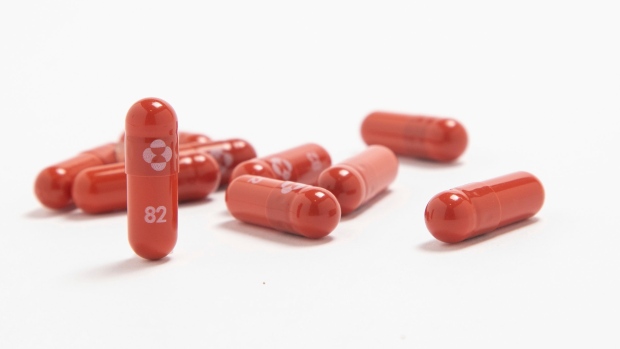
WASHINGTON -- Merck & Co. said Friday that its experimental COVID-19 pill reduced hospitalizations and deaths by half in people recently infected with the coronavirus and that it would soon ask health officials in the U.S. and around the world to authorize its use.

If cleared, Merck's drug would be the first pill shown to treat COVID-19, a potentially major advance in efforts to fight the pandemic. All COVID-19 therapies now authorized in the U.S. require an IV or injection.

Merck and its partner Ridgeback Biotherapeutics said early results showed patients who received the drug, called molnupiravir, within five days of COVID-19 symptoms had about half the rate of hospitalization and death as patients who received a dummy pill. The study tracked 775 adults with mild-to-moderate COVID-19 who were considered higher risk for severe disease due to health problems such as obesity, diabetes or heart disease.

Among patients taking molnupiravir, 7.3% were either hospitalized or died at the end of 30 days, compared with 14.1% of those getting the dummy pill. There were no deaths in the drug group after that time period compared with eight deaths in the placebo group, according to Merck. The results were released by the company and have not been peer reviewed. Merck said it plans to present them at a future medical meeting.

An independent group of medical experts monitoring the trial recommended stopping it early because the interim results were so strong. Company executives said they are in discussions with the Food and Drug Administration and plan submit the data for review in coming days.

"It exceeded what I thought the drug might be able to do in this clinical trial," said Dr. Dean Li, vice president of Merck research. "When you see a 50% reduction in hospitalization or death that's a substantial clinical impact."

Side effects were reported by both groups in the Merck trial, but they were slightly more common among the group that received a dummy pill. The company did not specify the problems.

Earlier study results showed the drug did not benefit patients who were already hospitalized with severe disease.

The U.S. has approved one antiviral drug, remdesivir, specifically for COVID-19, and allowed emergency use of three antibody therapies that help the immune system fight the virus. But all the drugs have to given by IV or injection at hospitals or medical clinics, and supplies have been stretched by the latest surge of the delta variant.

Health experts including the top U.S. infectious disease expert Dr. Anthony Fauci have long called for a convenient pill that patients could take when COVID-19 symptoms first appear, much the way the decades-old flu medication Tamiflu helps fight influenza. Such medications are seen as key to controlling future waves of infection and reducing the impact of the pandemic.

Merck's pill works by interfering with an enzyme the coronavirus uses to copy its genetic code and reproduce itself. It has shown similar activity against other viruses.

The U.S. government has committed to purchase 1.7 million doses of the drug if it is authorized by the FDA. Merck has said it can produce 10 million doses by the end of the year and has contracts with governments worldwide. The company has not announced prices.

Several other companies, including Pfizer and Roche, are studying similar drugs that could report results in the coming weeks and months.

Merck had planned to enroll more than 1,500 patients in its late-stage trial before the independent board stopped it early. The results reported Friday included patients enrolled across Latin America, Europe and Africa. Executives estimated about 10% of patients studied were from the U.S.

------

The Associated Press Health and Science Department receives support from the Howard Hughes Medical Institute's Department of Science Education. The AP is solely responsible for all content.

Adblock test (Why?)


Merck says experimental pill cuts worst effects of COVID-19 - CTV News
Read More

Bitcoin price continues surge as Fed chairman says ‘no intention to ban’ cryptocurrency - Global News

Bitcoin continued its surge Friday morning, rising by nine per cent to $60,196 (US$47,536) — its highest level in 12 days.

The most recent gains, representing a $4,520 jump since closing on Thursday night, comes after U.S. Federal Reserve Chairman Jerome Powell said he has no intention to ban cryptocurrencies.

When asked in a House Financial Services Committee meeting on Thursday by House Representative Ted Budd (R-N.C) if he was looking at imposing similar restrictions like China to ban or limit cryptocurrency, Powell said “No.”

“(I have) no intention to ban them,” he said.

One week ago, China’s most powerful regulators cracked down cryptocurrencies putting a stop to crypto transactions and mining, which caused a  dip in the market. The crackdown came from a number of agencies including the central bank, financial, security and foreign regulators. It represented the first time that Beijing’s financial regulators worked in tandem to crackdown on cryptocurrency.

Read more: Bitcoin price sinks as China cracks down on cryptos, declares all transactions illegal

While Powell seems to want a hands off approach to Bitcoin and most cryptocurrency, he did mention that stablecoins would see a form of regulation moving ford. Stablecoins are a unique versions of crypto that are supported by an reserve asset like gold or the U.S. dollar, so they’re likened to digital or crypto versions of those traditional currencies.

“They’re to some extent outside the regulatory perimeter, and it’s appropriate that they be regulated,” he said.

The cryptocurrency boom doesn’t just stop at Bitcoin, with both ethereum and Ripple (XRP) enjoying bumps, jumping up by seven per cent and five per cent each.

-with files from Reuters

Adblock test (Why?)


Bitcoin price continues surge as Fed chairman says ‘no intention to ban’ cryptocurrency - Global News
Read More

Canadian economy bounces back during summer business reopenings - BNN

Canada’s economy returned to growth as consumers headed back to restaurants and entertainment venues, propelling spending on services. 

Gross domestic product rose 0.7 per cent in August, Statistics Canada said in a flash estimate in Ottawa. That’s a reversal from July, which showed a 0.1 per cent contraction, according to the report.

Economists were predicting a 0.2 per cent drop in output for July, after early guidance indicating a weak start to the second half of the year. The agriculture and manufacturing sectors were among the contributors to the decline.

The August figure suggests Canada’s economic recovery is back on track, with consumers leading the way as businesses reopened amid a strong vaccine rollout in the early summer months. While a cool-down in the housing market and supply chain disruptions drove a shock 1.1 per cent annualized contraction in the second quarter, Friday’s report supports analysts’ views that consumption, particularly in service sectors, will offset other weaknesses.

While high-contact sectors still have room to recover, there’s near-term risk that the delta variant and a return to schools could prompt a slowdown in consumption if Covid cases tick up again. The expansion in August will be a relief for the Bank of Canada, which in July predicted that third quarter output would come in at 7.3 per cent annualized. Friday’s GDP reading is the last one before the central bank updates its forecasts at its Oct. 27 policy decision.

Adblock test (Why?)


Canadian economy bounces back during summer business reopenings - BNN
Read More

Merck: Pill to treat Covid-19 cuts risk of death by half - CNN

Adblock test (Why?)


Merck: Pill to treat Covid-19 cuts risk of death by half - CNN
Read More

Ontario recommending Pfizer over Moderna vaccine for young adults - 680 News

Ontario recommends only the Pfizer-BioNTech (Comirnaty) vaccine be used in the 18 to 24-year-old age group due to a rare symptom caused by the Moderna (Spikevax) vaccine.

The provincial government made the determination following an increase in the heart conditions known as pericarditis and myocarditis.

Ontario’s chief medical officer of health, Dr. Kieran Moore, says it’s out of an abundance of caution and effective immediately.

The decision is based on the advice of Ontario’s children COVID-19 vaccine table, Ontario’s vaccine clinical advisory group and Public Health Ontario.

Moderna’s mRNA vaccine has a higher rate of the rare side effect in the aforementioned age group, particularly among young men.

Between June 1 and August 7 of this year, Moore says based on 96,000 administered doses of the mRNA vaccines to males aged 18 to 24, the risk of pericarditis and myocarditis following a second Moderna dose was 1 in 5,000.

It affects only 0.1 per cent of vaccine recipients.

For those who received the Pfizer-BioNTech, the rate was one in 28,000.

The majority of reported cases have been mild, Moore says, with affected individuals recovering quickly, usually with the help of anti-inflammatory medication.


RELATED: Pfizer, Moderna vaccines granted full approval by Health Canada; get unique name change


Symptoms have typically been reported one week after a vaccine shot and more commonly after a second dose. The province assures that those who have not reported symptoms should feel confident they will not develop the rare side effect at a later date.

A severe allergic reaction (anaphylaxis) and Bell’s palsy (facial paralysis) are also rare.

Moore says that individuals aged 18 to 24 that received Moderna as their first dose can safely take Pfizer-BioNTech as their second shot, adding that mixing vaccines is safe and effective.

Should residents wish to receive Moderna as their second shot and prefer to do so, the province says it can be authorized with informed consent.

Moore says provincial health officials will continue to administer the Pfizer-BioNTech vaccine in youths aged 12 to 17, including those turning 12 in 2021.

There are just under three million doses of the Pfizer vaccine readily available in Ontario. Moore says there is significant supply to ensure that the province moves ahead with the recommendation.

Moore is assuring residents who received the first shot of Moderna that they “absolutely did the right thing” to protect themselves against the virus and the Delta variant.

Health care providers must report possible reactions following vaccination to their local public health authority. The public health authority then reports them to the Public Health Agency of Canada.

Provincial data says 86 per cent of people aged 12 and older have at least one COVID-19 vaccine dose, and 80 per cent have received both shots.

Health Canada announced in mid-September that both Pfizer-BioNTech and Moderna’s mRNA vaccines were formally granted full approval for anyone aged 12-and-up in the country.

Pfizer-BioNTech’s vaccine was initially authorized for use in Canada under an interim order on December 9, 2020.

Adblock test (Why?)


Ontario recommending Pfizer over Moderna vaccine for young adults - 680 News
Read More

Chinese manufacturing thrown into disarray as country's electricity crisis rolls on - South China Morning Post

Adblock test (Why?)


Chinese manufacturing thrown into disarray as country's electricity crisis rolls on - South China Morning Post
Read More

Finding rapid COVID-19 tests across Canada, from relative ease to utter frustration - Global News

While Ontarians were left empty-handed after hours spent waiting in line for free COVID-19 rapid antigen testing kits over the weekend, res...