Rechercher dans ce blog

Rabu, 30 Juni 2021

Ontario's top doctor says three weeks between reopening stages is 'prudent' - CTV Toronto

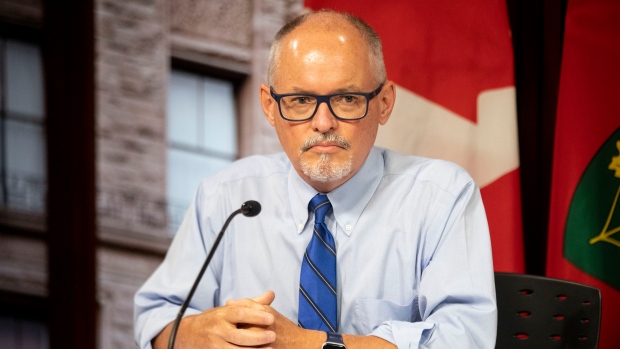
TORONTO -- Ontario is moving into the next step of its reopening plan on Wednesday and the province's top doctor says he'd prefer to wait a full 21 days before rolling back restrictions further.

"The two-to-three-week cycle is very important to maintain so that we do the opening of Ontario in a stepwise manner, always going forward and not having to take a step back," Dr. Kieran Moore said on Tuesday.

Moore made the comments at his first pandemic briefing since he officially took on the job as Ontario's chief medical officer of health.

Ontario has surpassed COVID-19 vaccination targets for entering the second step of its reopening plan, which will allow more outdoor activities and more indoor services like haircuts to resume on Wednesday.

More than 77 per cent of people had at least one vaccine dose as of Tuesday morning and 37 per cent were fully vaccinated.

The province set 21 days between each step of its economic reopening to observe public health trends and allow vaccines to take full effect. It moved up the second step of the plan by a few days based on vaccination rates and other positive COVID-19 trends.

Ontario has also passed the goal set for entering the third step of the reopening plan, which would further expand capacity for indoor gatherings.

But Moore, like his predecessor Dr. David Williams, maintained on Tuesday that vaccination isn't the only metric. He advised proceeding with caution with the more infectious Delta variant spreading.

People with one vaccine dose are less protected against that variant and it's contributed to local infection spikes in Grey Bruce and Waterloo Region.

Moore said he's watching the variant's impact locally and internationally and that reopening must be done cautiously to avoid losing progress made in the fight against the virus so far.

"It is a difficult adversary. It's aggressive, it wants to spread rapidly," he said of the variant.

"We need to be prudent and we need that 21 days to be able to understand the impact of opening on our communities."

Waterloo won't reopen with the rest of the province on Wednesday as it manages the rise in infections. Moore said travel from Waterloo into other areas with looser public health rules is discouraged.

Ontario reported 299 COVID-19 cases and 25 deaths from the virus on Tuesday, though the numbers include historic cases just now being counted.

A spokeswoman for the health minister says 90 cases from last year were being counted on Tuesday due to a data review by Toronto Public Health.

Nineteen deaths from previous months are also being counted.

This report by The Canadian Press was first published June 29, 2021.

Adblock test (Why?)


Ontario's top doctor says three weeks between reopening stages is 'prudent' - CTV Toronto
Read More

Feds making ‘assessment of demand’ from provinces for Johnson & Johnson vaccine supply - Global News

Procurement Minister Anita Anand says the federal government is conducting an “assessment of demand” for Johnson & Johnson’s COVID-19 vaccine supply with provinces and territories.

“Decisions are still being made regarding the J&J vaccine deliveries, but by all means, that contract is still in place and still able to yield vaccines for Canadians if the demand is there,” Anand said Tuesday.

The single-dose vaccine was initially lauded as a turning point for countries such as Canada looking to speed up vaccination efforts.

Read more: Canada to keep holding back J&J COVID-19 vaccines until U.S. lab probe is complete

But after a manufacturing mishap at a U.S. manufacturing plant in Baltimore, Health Canada said it wouldn’t release more than 300,000 doses of the vaccine over quality concerns and will continue to hold them back until an American investigation into the facility is complete.

Canada has signed an agreement for 10 million doses of the J&J shot. Joelle Paquette, the director-general responsible for vaccine procurement at Public Services and Procurement Canada, said Friday that the country could expect to receive a shipment of the vaccines by the end of June, but whether any shipments have been delivered remains unclear.

An official at Anand’s office told Global News there were no further updates on J&J deliveries at this time.

Brig. Gen. Krista Brodie, the military commander in charge of the country’s national vaccine delivery logistics, said that “at this point in time, we are not receiving a strong demand signal at all from the provinces” for J&J shots.

“We are focused on the mRNA vaccines, which are those that are really in demand by the provinces in order to accelerate those second dose strategies and to really get as many first doses as we can as soon as possible.”

Click to play video: 'Johnson & Johnson COVID-19 vaccine recommended for adults 30+ in Canada: NACI' Johnson & Johnson COVID-19 vaccine recommended for adults 30+ in Canada: NACI
Johnson & Johnson COVID-19 vaccine recommended for adults 30+ in Canada: NACI – May 3, 2021

J&J’s one-shot vaccine differs from Pfizer-BioNtech and Moderna’s mRNA vaccines, which require two doses. It is an adenovirus-based vaccine that showed an overall efficacy of 66 per cent in preventing moderate to severe COVID-19 in clinical trials.

It was recommended by Canada’s National Advisory Committee on Immunization for adults aged 30 years and older in May.

By the end of this week, Canada is expected to have received deliveries of 50 million doses of all vaccines for use by Health Canada — the vast majority of which being shots from Pfizer and Moderna.

Anand added that all eligible Canadians will be able to be fully vaccinated by the end of September.

Read more: Fully vaccinated against COVID-19? Canada unveils new guidance on what you can, can’t do

To date, she said the country has delivered 44 million vaccine doses to provinces and territories, and administered 36 million doses.

Canada’s chief public health officer Dr. Theresa Tam said that if not for the vaccines, the third wave of the pandemic would have been much deadlier.

She said she was “really struck” by how quickly infections and deaths plummeted among the most vulnerable, older populations in Canada as the vaccines began to roll out.

“We saw the numbers of cases, but also the serious outcomes decline very quickly in those populations,” she said. “All to say is, it’s even more important than than ever to keep up with the vaccinations.”

–With files from Global News’ Saba Aziz and the Canadian Press

© 2021 Global News, a division of Corus Entertainment Inc.

Adblock test (Why?)


Feds making ‘assessment of demand’ from provinces for Johnson & Johnson vaccine supply - Global News
Read More

Selasa, 29 Juni 2021

B.C.'s record-breaking state of emergency ending Wednesday night - CTV News Vancouver

VANCOUVER -- British Columbia's record-breaking state of emergency is coming to an end this week, approximately 67 weeks after it was declared in response to the COVID-19 pandemic.

The government confirmed the state of emergency will be lifted at 11:59 p.m. Wednesday, paving the way for the province to lift its mask mandate and ease several other restrictions designed to limit the spread of the disease.

Provincial health officer Dr. Bonnie Henry credited widespread immunization across B.C. for the progress that's allowing officials to move into Step 3 of the government's restart plan on Thursday.

"We have seen a dramatic and sustained decline in new cases across the province," Henry said. "We are continuing our careful and gradual approach to bringing us back together."

The province's state of emergency was declared on March 18, 2020, and was renewed 34 times. It has granted the government extraordinary powers, including the ability to enforce the mandatory mask policy and the travel restrictions that were lifted earlier this month.

The somewhat controversial measure resulted in thousands of tickets being issued in the province.

At last count, provided when the state was renewed on June 22, there had been 2,269 tickets given out.

Hundreds of these tickets came with $2,300 fines for owners or organizers of events not permitted under the provincial health officer's order on gatherings.

Nearly 1,700 tickets for $230 were given to individuals alleged to have been breaking the Emergency Program Act orders, and another 100 tickets for $575 each were issued for those the province said promoted or attended a barred event.

Dozens more were issued for other alleged violations including contravention of food and liquor orders and failing to comply with travel restrictions.

Adblock test (Why?)


B.C.'s record-breaking state of emergency ending Wednesday night - CTV News Vancouver
Read More

Canada's COVID-19 death toll may be double the official count: Report - CityNews

Adblock test (Why?)


Canada's COVID-19 death toll may be double the official count: Report - CityNews
Read More

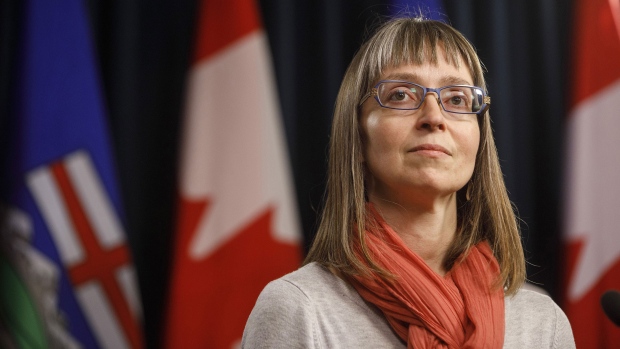
Hinshaw to give one more COVID-19 update before province turns to online reporting - CTV Edmonton

EDMONTON -- Alberta is reporting 61 new cases of COVID-19 Tuesday, including 16 variant cases, during the chief medical officer of health’s last scheduled COVID-19 update.

Alberta currently has 1,132 active COVID-19 cases, the lowest number since Aug. 26, according to Dr. Deena Hinshaw. The positivity rate for the province is sitting at 1.6 per cent after 3,453 tests on Monday.

“Across the board our numbers are moving in the right direction. Cases, hospitalizations, ICU admissions and our positivity rate are the lowest they’ve been since last summer,” said Hinshaw. “We should all be proud of these numbers and take heart in them.

“If we all keep making wise choices and more people get vaccinated, active cases could fall below 500 in a few short weeks.”

She also added that there are only five COVID-19 cases in all the continuing care facilities across Alberta.

There are currently 170 Albertans in hospital due to COVID-19, including 36 in intensive care. There have been four new deaths due to the disease, bringing Alberta’s total to 2,299.

“It is to prevent outcomes like this that immunization is so important,” said Hinshaw.

The province is changing the data it uses to report the percentage of Albertans who have been vaccinated to be in line with the federal government and many other provinces in Canada, according to Hinshaw.

The province will now use the Statistics Canada July 2020 population data for vaccination rate reporting, rather than Alberta Health’s 2021 population data.

Tuesday, the province reported that 72.7 per cent of eligible Albertans have received a single vaccine dose and 40.7 per cent have been fully vaccinated.

Vaccine trials are underway for children under 12, who are not eligible for any COVID-19 vaccines yet. Hinshaw said there is no timeline yet for if or when a vaccine will be approved for that age group.

She advised that the best way to protect younger Albertans is for people in their lives who are eligible to get vaccinated to do so.

Hinshaw added that crowded indoor spaces tend to be higher risk spaces, rather than outdoor spaces.

Many municipalities in the province are set to lift their own mandatory mask bylaws on July 1, like the province, but still recommend wearing masks.

RARE VACCINE SIDE EFFECT

Hinshaw addressed reports from Israel and the U.S. of “a rare side effect” that caused heart lining and heart muscle lining inflammation after Pfizer and Moderna vaccine doses.

“This side effect is being seen most often in younger people, mostly males,” said Hinshaw.

“The heart inflammation reported after the second dose is almost always very mild, resolving with anti-inflammatory treatment.”

She said Canada and the U.K. had not seen similar numbers to the U.S. and Israel, “possibly due to the fact that second doses in younger people have not yet been given in large numbers.”

“Young people who get infected with COVID-19 have about 100 times greater risk of experiencing heart inflammation than what is being seen after the second dose in Israel and the U.S.,” said Hinshaw.

She added that advisory bodies in the U.S., Israel and Alberta determined that the benefit of being immunized “far outweighs” the risks.

“I continue to recommend that all Albertans 12 and older get the vaccine, first and second doses, to be protected.”

Hinshaw added that since January, 95 per cent of people infected with COVID-19 had not received a dose of a vaccine, “or hadn’t yet developed immunity from the first dose.” The same is true for 92 per cent of people hospitalized with the disease in that time frame.

“Vaccines are safe,” said Hinshaw.

ALBERTA IN STAGE 3

Alberta is set to remove all public health restrictions on Thursday. Masks will still be required under provincial regulations in certain circumstances, including on transit, in taxis and ride shares.

“While cases are dropping and spread is declining, COVID-19 is not going away completely. It remains a potentially serious illness that we must keep respecting,” said Hinshaw.

She reminded Albertans who feel “even a little unwell” to stay home and get a COVID-19 test.

Beginning on July 5, two designated support people will be allowed to visit patients at the same time at AHS acute care facilities in the province, according to Hinshaw.

Hinshaw also advised Albertans to do research before travelling as some places may still require incoming travelers to quarantine.

“There will be challenges in the months ahead. We will still identify new cases and outbreaks will occur, but we are watching closely, ready to act as needed, and I am confident that we will get through this, as we always have, together,” said Hinshaw.

Contact tracing and variant screening will continue to happen. Hinshaw added that COVID-19 will become one of many illnesses and risks Albertans deal with every day, not the main one.

Hinshaw announced June 22 that she would stop giving twice-weekly COVID-19 updates. Data will be announced online going forward unless a live update is “needed.”

An increase in cases and hospitalizations could prompt a live update from the chief medical officer of health, but she added that there could be “good news stories,” such as lifting more restrictions, that would prompt one as well. 

Adblock test (Why?)


Hinshaw to give one more COVID-19 update before province turns to online reporting - CTV Edmonton
Read More

Third wave would have killed more people in Canada without vaccines: Tam - CTV News

OTTAWA -- Canada's chief public health officer says without vaccines the third wave of COVID-19 in Canada would have been much deadlier.

Dr. Theresa Tam said Tuesday as vaccines began to roll out she was in awe of how well they began to ease the impact the pandemic was having on Canada's elderly.

"We saw the numbers of cases, but also the serious outcomes declined very quickly in those populations," said Tam.

A Canadian Press analysis of epidemiology data posted online by Health Canada shows in January, when the second wave of COVID-19 peaked, more than 4,000 Canadians over the age of 80 died from it.

In April, when the third wave peaked and most Canadians over 80 had at least one dose of vaccine, the number of deaths in that age group fell below 500.

The number of cases confirmed in people over 80 averaged more than 470 a day in January, and 122 in April.

While Canada's slower than hoped vaccine rollout rankled throughout the winter, the emphasis was on getting vaccinations first to the people most vulnerable to COVID-19.

Less than one-tenth of Canadians over 80 had their first dose of vaccine by the end of January, but by the end of April almost 90 per cent had at least one dose and more than 15 per cent were fully vaccinated. In long-term care homes, where many of the worst outbreaks occurred, full vaccinations were largely completed by April.

That helped limit the outbreaks of COVID-19 in long-term care this spring.

As of June 19, only six per cent of people over 80 were not even partially vaccinated, and two-thirds are fully vaccinated.

"If you imagine this third wave without the vaccine, the mortality impact would have been much higher," said Tam.

The death toll in the second wave averaged more than 150 deaths a day for part of January. In the third wave, the highest average death count was about one-third of that.

The lack of vaccinations among kids may also now be playing out in the spread of COVID-19.

Children and teenagers now account for the largest share of Canada's total COVID-19 cases for the first time. Canadians in their 20s have accounted for the largest share of cases since last summer, but as of June 25, people under 19 now account for 19.3 per cent of the 1.4 million cases confirmed in Canada, slightly ahead of the 19.16 per cent for 20 to 29 year olds.

More than 60 per cent of teenagers now have at least one dose of vaccine, but children under 12 aren't eligible for vaccinations yet. That fact, combined with the more transmissible Delta variant of the virus that causes COVID-19, is a conundrum for health policy-makers and politicians deciding what advice to give fully vaccinated adults.

New federal guidance issued by Tam's office Friday suggests fully vaccinated people can take off their masks and socialize in close quarters with other people who are fully vaccinated. But families whose kids can't be vaccinated were left wondering what that meant for them.

"More and more of us are asking when can we hug our loved ones, in particular grandparents, aunts and uncles are looking for advice for when they can share hugs with the kids in their lives," Tam said.

"The answer is because children under 12 are not eligible for vaccinations yet, there is still a risk they can get infected with COVID-19 and pass the virus on to others. However, if you and everyone else around them are fully vaccinated, the risk is lower."

Tam was less clear about what the new variants mean for lifting public masking requirements. Alberta intends to cancel its provincewide mask mandate on Canada Day. Saskatchewan will follow on July 11.

The World Health Organization said Friday fully vaccinated people should continue to wear masks in public because the vaccines aren't preventing infections entirely.

Tam said the Delta variant will mean more people need to get fully vaccinated to prevent a punishing fourth wave this fall. Federal modelling released Friday incorporate the data on Delta for the first time, including that it is 1.5 times as infectious as the Alpha variant now dominant in Canada, and twice as virulent.

But Tam said if 80 per cent of Canadians between 12 and 54 are fully vaccinated by the fall, it should prevent another surge in hospitalizations.

Nationally, COVID-19 hospitalizations are at an eight-month low, with about 900 people currently in hospital. The number of people in intensive care is below 500 for the first time since November.

This report by The Canadian Press was first published June 29, 2021.

Adblock test (Why?)


Third wave would have killed more people in Canada without vaccines: Tam - CTV News
Read More

Nova Scotia Starting Third Phase of Reopening, Opening Border to Canada - Government of Nova Scotia

Premier Iain Rankin and Dr. Robert Strang, Nova Scotia’s chief medical officer of health, announced today, June 29, that Nova Scotia will start the third phase of its reopening plan on Wednesday, June 30, including opening the border to all Canadians.

“We’ve all been looking forward to the day when we can once again welcome all Canadians to visit our beautiful province,” said Premier Rankin. “Thanks to the hard work of Nova Scotians and our robust border and testing strategies, we’re now in a position to do that. Families and friends can see each other again, businesses can operate with less restriction and visitors can safely enjoy summer in Nova Scotia while still following public health measures.”

Residents of Atlantic Canada will be able to travel to Nova Scotia without having to self-isolate. If they are already in Nova Scotia, they can stop isolating on June 30.

People from other provinces and territories can come to Nova Scotia for any reason. They need to complete the Nova Scotia Safe Check-in form, upload their proof of vaccination electronically and be prepared to show it if asked by border officials.

The requirement to self-isolate or not is based on their vaccination status:

  • two doses of vaccine at least 14 days before arriving in Nova Scotia – people will not have to self-isolate; testing when they arrive is recommended
  • one dose of vaccine at least 14 days before arrival and those who had a second dose less than 14 days before arrival – people must self-isolate for at least seven days and cannot leave isolation until they get two negative tests results while in Nova Scotia; tests should be on day one or two and on day five or six after arrival
  • no vaccine – people who have not had any vaccine and those who had a first dose within 14 days of arrival must isolate for 14 days; testing at the beginning and end of their isolation continues to be recommended

Anyone from outside Atlantic Canada who is already in Nova Scotia and isolating can switch to isolation based on the above vaccination status and testing policy on June 30.

“As we start welcoming people from across the country, we are also now in a position to reopen further within Nova Scotia with larger gathering limits and higher capacity for businesses,” said Dr. Strang. “We still need physical distance and masks in many settings, and everyone should get their first and second doses of vaccine as soon as possible and continue getting tested regularly.”

Each phase of the reopening plan is based on COVID-19 activity, hospitalizations, vaccination rates and continued testing. Heading into Phase 3, 73 per cent of all Nova Scotians have had one or more doses of vaccine, cases are typically in single digits each day and hospitalizations are decreasing. Testing volume is down slightly at an average of more than 5,300 per day and there is capacity to increase if needed.

Effective 8 a.m., June 30, the following restrictions are being eased provincewide:

Gatherings

  • informal gatherings can include a household plus 10 people indoors, or 25 people total outdoors without physical distance
  • faith gatherings, weddings, funerals and associated receptions and visitation hosted by a recognized business or organization can have 50 per cent capacity to a maximum of 100 people indoors or 150 people outdoors

Business

  • restaurants and licensed establishments continue to operate with existing mask and distancing rules; customers can go to the bar to order; establishments must stop service by midnight and close by 1 a.m.; they can have performers following the limit for arts and culture performances
  • all retail stores can operate at 75 per cent capacity
  • personal services such as hair salons, barber shops and spas can offer all services by appointment or drop-in, following their sector plan
  • meetings and training hosted by a recognized business or organization can have 50 per cent capacity to a maximum of 100 people indoors or 150 people outdoors
  • events hosted by a recognized business or organization can have 50 per cent capacity to a maximum of 100 people indoors or 150 people outdoors; organizers need a plan following guidelines for events

Recreation and sport

  • fitness and recreation facilities such as gyms, yoga studios, pools and arenas can operate at 75 per cent capacity with public health measures
  • a wide variety of recreation and leisure businesses and organizations, such as dance classes, music lessons, escape rooms and indoor play spaces, can operate at 50 per cent capacity
  • organized sports practices, games, league play and recreation programs can involve up to 25 people indoors and 50 people outdoors without physical distancing; there can be no tournaments
  • audiences follow the gathering limits for events hosted by a recognized business or organization
  • day camps can operate with 20 campers per group plus staff and volunteers, following the day camp guidelines
  • overnight summer camps can operate with 15 campers per group plus staff and volunteers, following the overnight camp guidelines

Arts and culture

  • professional and amateur arts and culture rehearsals and performances can involve up to 15 people indoors and 25 outdoors without physical distancing
  • audiences follow the gathering limits for events hosted by a recognized business or organization
  • museums, libraries and the Art Gallery of Nova Scotia can open at 50 per cent capacity

Continuing care

  • indoor visits with fully vaccinated residents can resume in designated visitation areas at long-term care facilities
  • physical distancing is no longer required for outdoor visits at long-term care facilities
  • fully vaccinated residents can go to indoor and outdoor public places like parks, stores and restaurants

People who do not follow the public health measures can be fined. For example, the fine is $2,000 for each person at an illegal gathering.

Additional Resources:

COVID-19 testing appointments: https://covid-self-assessment.novascotia.ca/en

Government of Canada: https://canada.ca/coronavirus

Government of Canada information line 1-833-784-4397 (toll-free)

The Mental Health Provincial Crisis Line is available 24/7 to anyone experiencing a mental health or addictions crisis, or someone concerned about them, by calling 1-888-429-8167 (toll-free)

If you need help with a non-crisis mental health or addiction concern call Community Mental Health and Addictions at 1-855-922-1122 (toll-free) weekdays 8:30 a.m. to 4:30 p.m.

Kids Help Phone is available 24/7 by calling 1-800-668-6868 (toll-free)

For help or information about domestic violence 24/7, call 1-855-225-0220 (toll-free)

-30-

Adblock test (Why?)


Nova Scotia Starting Third Phase of Reopening, Opening Border to Canada - Government of Nova Scotia
Read More

Finding rapid COVID-19 tests across Canada, from relative ease to utter frustration - Global News

While Ontarians were left empty-handed after hours spent waiting in line for free COVID-19 rapid antigen testing kits over the weekend, res...